Serving Kitchener, Waterloo, Cambridge, & Surrounding Areas |
  Call Us:
  Emergency? Email Us:




Got a Backflow or Cross Connection Testing Notice? What to Do Next

If you've never received a backflow prevention or cross connection testing notice, you may be looking at it in confusion. The likelihood is that you've never dealt with something like it before. You may feel concern or panic and wonder whether there's a problem with your plumbing, whether you need repairs, or what will happen if you don't respond in time.
Take a breath. The good news is that receiving a testing notice doesn't always mean something is wrong; often, these notices are part of local municipal programs designed to protect the public's drinking water supply.
It largely depends on the type of property you own, but you may be required to have backflow prevention devices installed, tested, and regularly maintained.
At J.C. Waterworks Plumbing, we provide certified backflow testing, repair and installation services throughout Kitchener, Waterloo, Cambridge and surrounding areas. If you have received a notice, here is what you should know and what to do next. Don't worry: our experienced team has got you, and there's no need for panic.
What Is Backflow and Why Does it Matter?
Plumbing systems are designed to allow water to flow in a specific direction from the municipal water supply into your property. Backflow usually occurs when that flow reverses. When the wrong conditions arise, water or other substances from your property can move backward into the local drinking water system; this is a concern because a plumbing system can contain both water and other substances that DO NOT belong in the local water supply.
Something as simple as a change in water pressure can cause backflow.
A change in water pressure can contribute to backflow. For example, if pressure in the municipal water system drops, water from a connected plumbing system could potentially move in the opposite direction.
This is where backflow prevention comes in, and it's essential to avoid potential hazards and serious headaches.
What Is a Cross Connection?
A cross connection is any direct or temporary connection between a safe drinking water supply and a source of contaminated or non-potable water. These connections apply in multiple scenarios, including irrigation systems, fire protection systems, boilers, industrial equipment, and other water-connected systems.
The City of Kitchener notes that backflow prevention is particularly important for commercial, institutional, large residential, and irrigation systems.
The City of Cambridge similarly identifies connections involving irrigation, fire sprinkler systems and water-using equipment as examples of potential cross connections.
The purpose of identifying these connections is not to suggest that your plumbing is unsafe. Instead, it allows the appropriate protection to be installed and maintained before a backflow event can create a problem.
Why Did I Receive a Testing Notice?
If you've received a backflow or cross connection testing notice, that typically means the municipality is requesting you to complete a specific compliance requirement. These requirements are going to be specific based on your municipality, property type, and the way your plumbing is set up.
For example, Waterloo requires backflow prevention devices for industrial, commercial, institutional, and multi-residential properties. Property owners are responsible for installing and maintaining approved devices, hiring certified testers, and submitting required documentation.
Cambridge's Cross Connection Control Program also requires applicable properties to have backflow prevention devices maintained and tested regularly. The city states that backflow preventers must be tested annually by a tester licensed by the City of Cambridge.
Kitchener has a backflow prevention bylaw covering commercial, industrial, institutional, large multi-residential buildings and irrigation systems.
So, if a notice arrives in the mail, DO NOT IGNORE IT. The notice should tell you what needs to be completed and when it is due.
Step 1: Read the Notice Carefully
Your first step should be to read the entire notice line by line; if there's anything you don't understand, don't be afraid to reach out to a professional plumber to help explain it. Any time you receive a notice from a legal team, government, or municipality, don't risk ignoring it.
Look for information such as:
The reason for the notice.
The property or device being referenced.
The testing or survey deadline.
Whether a test, inspection, or cross connection survey is required.
Instructions for submitting documentation.
Any municipal contact information.
Requirements for using an approved or certified tester.
Keep the notice so you can show it to a plumbing professional; don't try to interpret it from memory. It can provide important information about exactly what the municipality is requesting.
Step 2: Determine Whether You Need Testing or a Survey -- There's a Difference
One of the most important distinctions to understand is the difference between testing a backflow prevention device and conducting a cross connection survey. A backflow test focuses on an installed backflow prevention device to determine whether it's functioning as it should, while a cross connection survey is a broader inspection. It involves reviewing the plumbing system to identify existing cross connections and determine whether the proper backflow protection is in place; the municipality will generally identify which service is required.
For example, Cambridge requires annual testing of applicable backflow prevention devices and a cross connection survey every three years.
Waterloo's requirements can include cross connection surveys, permits, installation requirements, and annual testing of testable devices. Because requirements can vary, follow the instructions associated with your specific property and municipality.
Step 3: Hire a Qualified Backflow Tester
Backflow testing is not the same as a standard plumbing repair. You need an experienced individual or team that provides this specific service to ensure everything is properly reviewed, such as the team at J.C. Waterworks Plumbing.
The person performing the test needs the appropriate certification and, depending on the municipality, may need to be recognized or licensed by the local water authority. This is an important step because you may need to submit your test report to the municipality as proof that a qualified professional tested and verified the device.
J.C. Waterworks has licensed plumbers and certified backflow testing capabilities, allowing us to provide backflow testing, repair and installation services.
When arranging service, have your notice available and provide the technician with the deadline. This helps ensure the appropriate service is scheduled, and the required paperwork is addressed.
Step 4: Have Your Backflow Prevention Device Tested
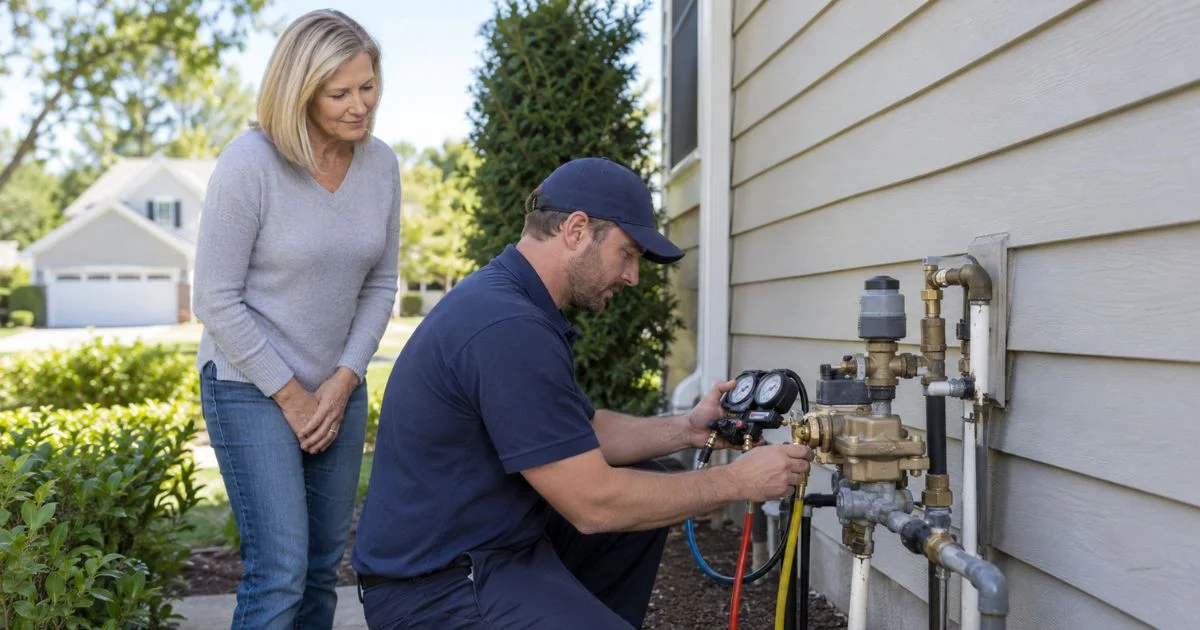
During a backflow test, the tester examines the device to determine whether it is operating as intended. A properly functioning backflow prevention device is designed to prevent water from flowing in the wrong direction and possibly entering the municipal water supply. An experienced plumbing professional will carefully document the results and determine whether or not the device passes the test or needs attention or replacement. Don't confuse this test with a quick visual inspection; proper backflow testing requires specialized procedures and equipment used by a qualified tester.
Waterloo's bylaw requires testable backflow prevention devices to be tested when first installed and annually thereafter, as well as in certain other circumstances. If you have concerns, check your local municipal website and contact a qualified plumber.
Step 5: Make Sure the Paperwork Is Submitted
Getting the device tested is only part of the process.
Depending on your municipality and the type of work completed, you may need to submit a test report or survey to the city.
For example, Waterloo requires applicable test reports to be submitted according to its program requirements and notes that late submissions can result in additional fees.
Cambridge requires test reports and surveys to be submitted through its City Application Portal.
Your tester may be able to help with the reporting process, but property owners should still confirm that the required documentation has been submitted and accepted.
Keep copies of your test reports and related paperwork for your records. Having documentation from previous tests can make future compliance much easier.
What If You Need a New Backflow Preventer?
Sometimes a notice or cross connection survey identifies a situation where additional protection is required. In that case, you may need to install a new device. The right device for your property depends on the type of connection and the potential hazard involved.
Different types of backflow preventers provide different levels of protection, so picking one isn't just about matching the product to an existing pipe. Installation may also require municipal approval or a permit, so check your local municipal website and consult a qualified professional who can help you understand what's required, what will work best, and what will last well into the future.
Don't Ignore the Deadline
A huge mistake property owners make after receiving a backflow notice is putting it aside and deciding to "deal with it later." Like a college student ignoring homework, you risk consequences if you miss an important deadline. Municipal backflow prevention programs exist to protect the public water supply.
While this depends on the municipality and circumstances, consequences can include late fees, enforcement measures, or even water service interruption. The City of Cambridge notes that failure to install and maintain required backflow protection can result in water being shut off and/or a fine.
Waterloo also has requirements surrounding testing, reporting, and fees for late submissions. That is why you should never wait until the last minute to connect with a qualified plumbing professional; getting the necessary service as soon as possible is always better than waiting.
Backflow Prevention Is About More Than Compliance
It is easy to think of a backflow notice as just another piece of municipal paperwork. In reality, backflow prevention serves an important purpose: protecting the drinking water system.
A backflow prevention device creates a physical safeguard between the potable water supply and potential sources of contamination. Regular testing helps verify that the protection is working as intended.
For property owners, staying on top of testing also makes it easier to identify aging or malfunctioning equipment before it becomes a larger plumbing concern.
Need Backflow Testing in Kitchener-Waterloo or Cambridge?
If you have received a backflow or cross connection testing notice, J.C. Waterworks Plumbing can help you determine what to do next. Our experienced team of professionals provides certified backflow testing, repair, and installation services for customers throughout Kitchener-Waterloo, Cambridge, and surrounding areas.
Our team includes licensed plumbers and certified backflow testers, giving property owners access to the specialized plumbing services needed to address backflow prevention requirements.
Don't know where to start when you receive a notice? Give us a call, review your deadline, and let us take the stress off your shoulders. We'll determine whether you need testing, a cross connection survey, repairs, or a new device altogether.
Addressing the requirement promptly can help keep your property compliant while helping protect the local drinking water supply.
If you have received a backflow notice and are not sure what it means, contact J.C. Waterworks Plumbing to discuss your next steps.